Description
Research Peptide Blend≥99% HPLC StandardShips from Canada
Overview
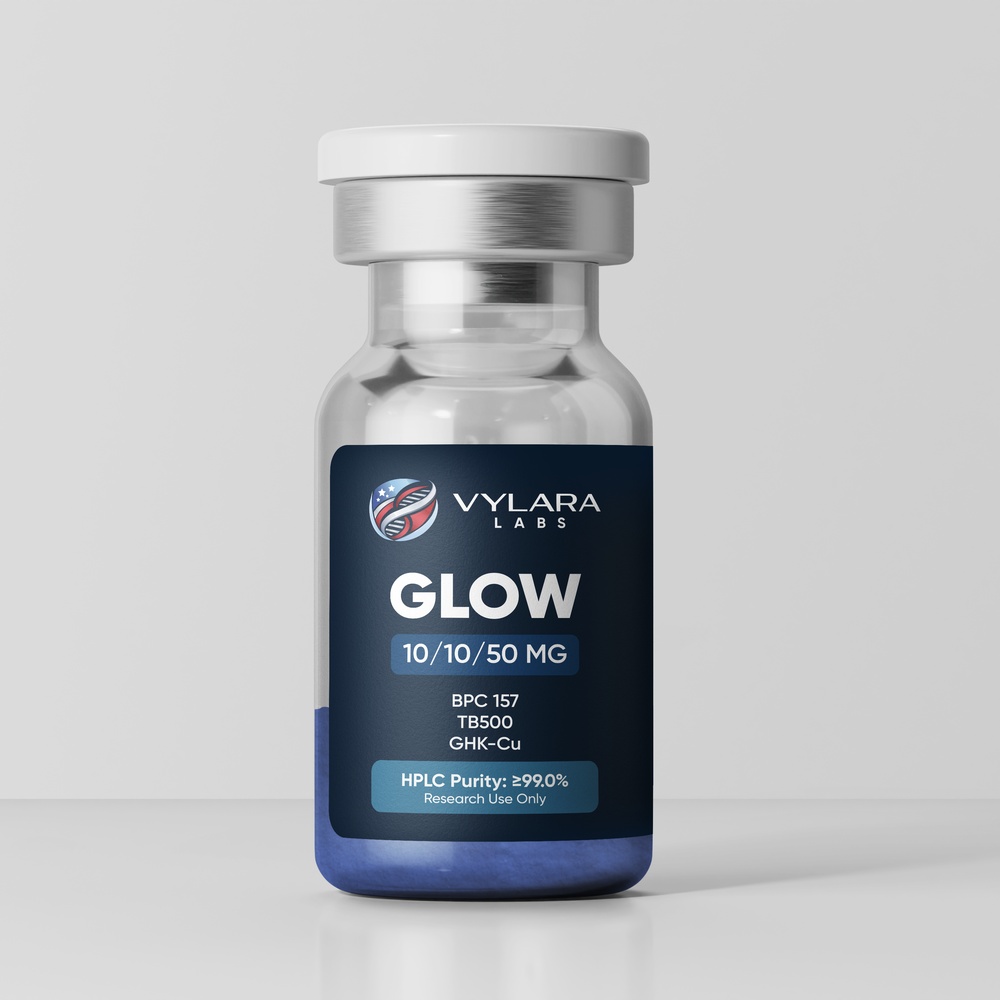
GLOW is a research blend co-lyophilizing three peptides in a single vial: BPC-157 (a stable gastric-derived pentadecapeptide), GHK-Cu (the copper-binding tripeptide glycyl-histidyl-lysine), and TB-500 (a fragment of thymosin β-4). It is intended for combined-exposure studies.
The three are grouped because each is studied in tissue-repair and skin-biology research through a different mechanism — cytoprotection and angiogenesis (BPC-157), extracellular-matrix synthesis (GHK-Cu), and actin regulation and cell migration (TB-500). No published study evaluates this specific blend; the references below concern the individual components. It is offered strictly as a research material, and the studies cited describe preclinical findings only.
Mechanisms of interest in research
BPC-157: cytoprotection and angiogenesis
Studied for effects on blood-vessel formation and cell survival via VEGFR2 and nitric-oxide signalling.
GHK-Cu: extracellular-matrix synthesis
A copper-binding tripeptide studied for stimulating collagen, elastin and glycosaminoglycan synthesis in skin and connective-tissue models.
TB-500: actin regulation and cell migration
Carries the actin-binding motif of thymosin β-4 and is studied for promoting the cell migration underlying wound repair.
Specifications
Selected Research
The following peer-reviewed studies are provided for scientific context on this compound’s research background. They describe preclinical and in-vitro findings only and are not claims about this product.
On BPC-157:
In cultured tendon explants and fibroblasts, BPC-157 increased fibroblast outgrowth and migration via the FAK–paxillin pathway.
Chang CH, et al. J Appl Physiol. PMID: 21030672
On GHK-Cu:
A review reports that GHK stimulates blood-vessel and nerve outgrowth and increases collagen, elastin and glycosaminoglycan synthesis across tissues.
Pickart L, et al. Int J Mol Sci. PMID: 29986520
On TB-500 (thymosin β-4):
In animal-model studies, thymosin β-4 promoted cell migration, blood-vessel formation and cell survival while reducing inflammatory mediators.
Philp D, et al. Ann N Y Acad Sci. PMID: 20536453
This product is intended exclusively for in-vitro laboratory research. It is not a drug, food, dietary supplement, or cosmetic, and it is not intended for human or veterinary diagnostic, therapeutic, or recreational use.