Description
Research Peptide≥99% HPLC StandardShips from Canada
Overview
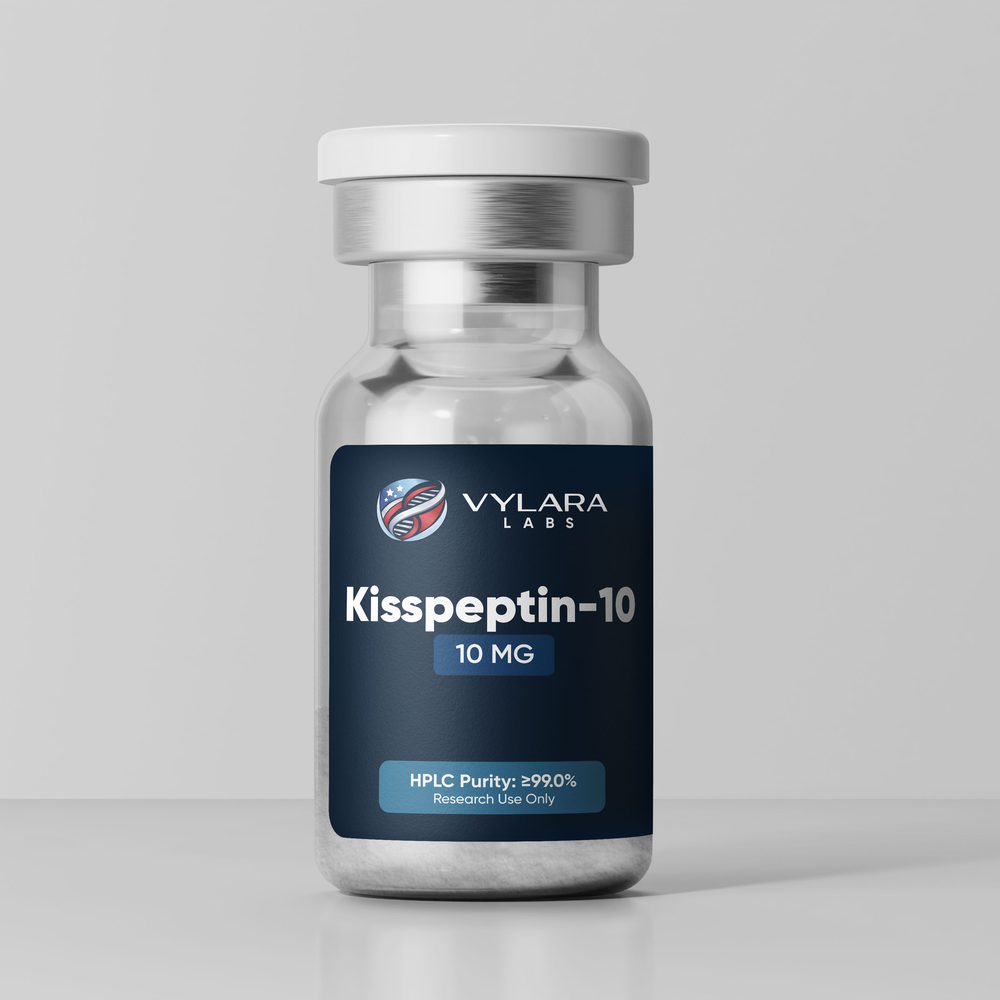
Kisspeptin-10 is a 10-amino-acid peptide corresponding to the C-terminal, biologically active fragment of kisspeptin, the product of the KISS1 gene. It is the natural ligand of the KISS1R (GPR54) receptor. It is supplied as a stable lyophilized peptide.
In research it is studied as an upstream trigger of the reproductive hormone axis: kisspeptin neurons drive the release of gonadotropin-releasing hormone (GnRH), which in turn controls luteinizing hormone (LH) and follicle-stimulating hormone (FSH). It is offered strictly as a research material, and the study cited below describes clinical-pharmacology findings only.
Mechanisms of interest in research
KISS1R (GPR54) receptor agonism
Kisspeptin-10 activates the KISS1R receptor on GnRH neurons, the essential gatekeeper of reproductive function. This receptor engagement is the defining mechanism studied.
GnRH release and the reproductive axis
By stimulating GnRH neurons, kisspeptin-10 is examined for downstream release of LH and FSH from the pituitary and the resulting effects on gonadal hormones in model and human studies.
Regulation of LH pulse frequency
Beyond acute release, kisspeptin signalling is studied for shaping the pulsatile pattern of LH secretion that governs the reproductive cycle.
Specifications
Certificate of Analysis
Representative testing for Kisspeptin-10, part of our ongoing quality program. Testing is conducted on Vylara-supplied samples of this compound.
Selected Research
The following peer-reviewed studies are provided for scientific context on this compound’s research background. They describe preclinical and in-vitro findings only and are not claims about this product.
In men, boluses of kisspeptin-10 potently stimulated LH secretion, and continuous infusion raised testosterone and increased LH pulse frequency and size.
George JT, et al. J Clin Endocrinol Metab. PMID: 21632807
In women, the related isoform kisspeptin-54 stimulated LH release most potently during the preovulatory phase, with responses varying across the menstrual cycle.
Dhillo WS, et al. J Clin Endocrinol Metab. PMID: 17635940
This product is intended exclusively for in-vitro laboratory research. It is not a drug, food, dietary supplement, or cosmetic, and it is not intended for human or veterinary diagnostic, therapeutic, or recreational use.