Description
Research Peptide≥99% HPLC StandardShips from Canada
Overview
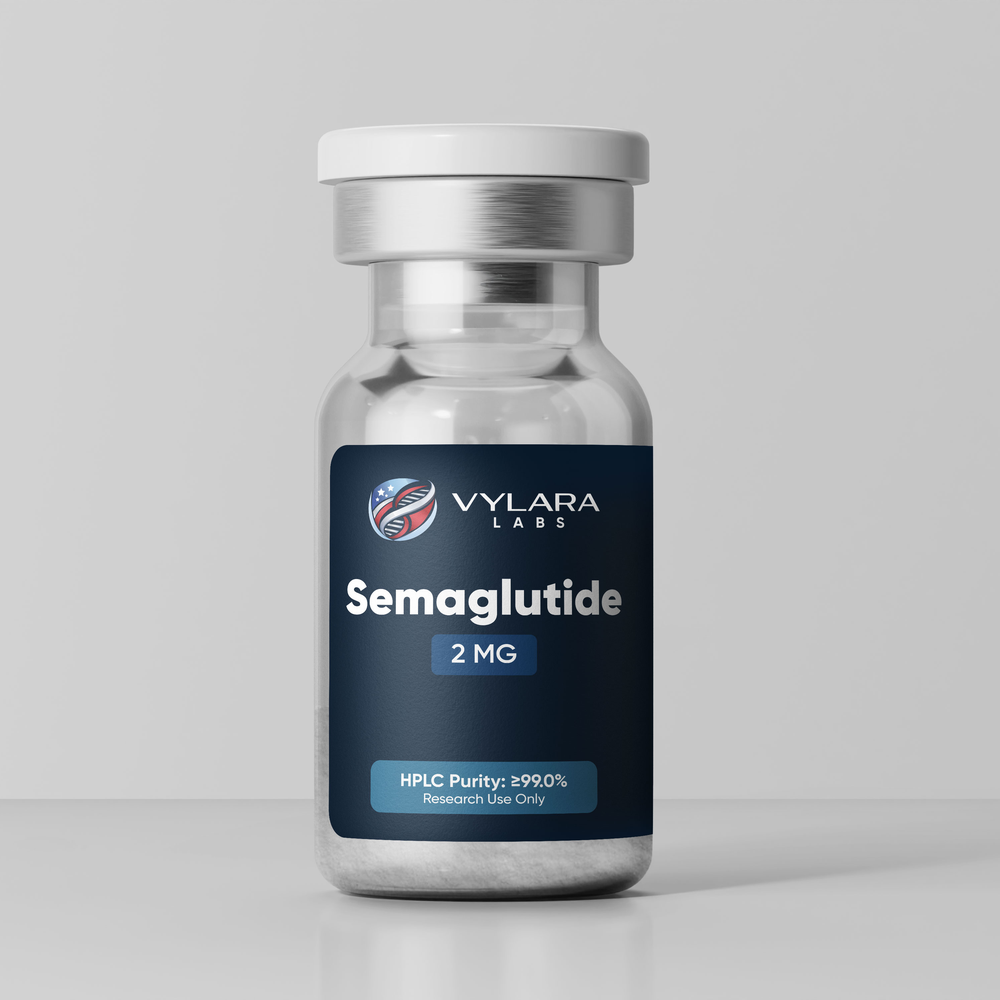
Semaglutide is a long-acting analog of glucagon-like peptide-1 (GLP-1), a gut-derived incretin peptide. It is engineered with amino-acid substitutions that resist the degrading enzyme DPP-4 and a C18 fatty-diacid chain that binds serum albumin, giving it a long circulating half-life. It is supplied as a stable lyophilized peptide.
As a GLP-1 receptor agonist it is studied in metabolic research for its effects on incretin signalling — glucose-dependent insulin secretion, glucagon suppression, gastric emptying, and central appetite pathways. It is offered strictly as a research material, and the studies cited below describe clinical-pharmacology findings only.
Mechanisms of interest in research
GLP-1 receptor agonism and insulin secretion
GLP-1 is an incretin hormone released from the gut after eating; at its receptor on pancreatic β-cells it enhances glucose-dependent insulin secretion. Semaglutide reproduces this signal with prolonged action, and in model systems it raises insulin output chiefly when glucose is elevated — a glucose-dependent profile central to its study.
Glucagon suppression and gastric emptying
GLP-1 receptor activation also suppresses glucagon release from pancreatic α-cells and slows gastric emptying. These actions are studied as contributors to lowered post-meal glucose excursions.
Central appetite signalling
GLP-1 receptors in the hypothalamus and brainstem influence satiety. Semaglutide is examined for engagement of these central pathways and the associated reduction in food intake in model systems.
Specifications
Selected Research
The following peer-reviewed studies are provided for scientific context on this compound’s research background. They describe preclinical and in-vitro findings only and are not claims about this product.
In type 2 diabetes managed with metformin (with or without a sulphonylurea), semaglutide at 0.5 and 1.0 mg significantly reduced HbA1c and body weight, with comparable tolerability across backgrounds.
Capehorn M, et al. Diabetes Ther. PMID: 32193837
A state-of-the-art review of GLP-1 receptor agonists notes that a daily oral semaglutide formulation showed clinical effectiveness comparable to the once-weekly subcutaneous version.
Nauck MA, et al. Mol Metab. PMID: 33068776
This product is intended exclusively for in-vitro laboratory research. It is not a drug, food, dietary supplement, or cosmetic, and it is not intended for human or veterinary diagnostic, therapeutic, or recreational use.