Description
Research Peptide Blend≥99% HPLC StandardShips from Canada
Overview
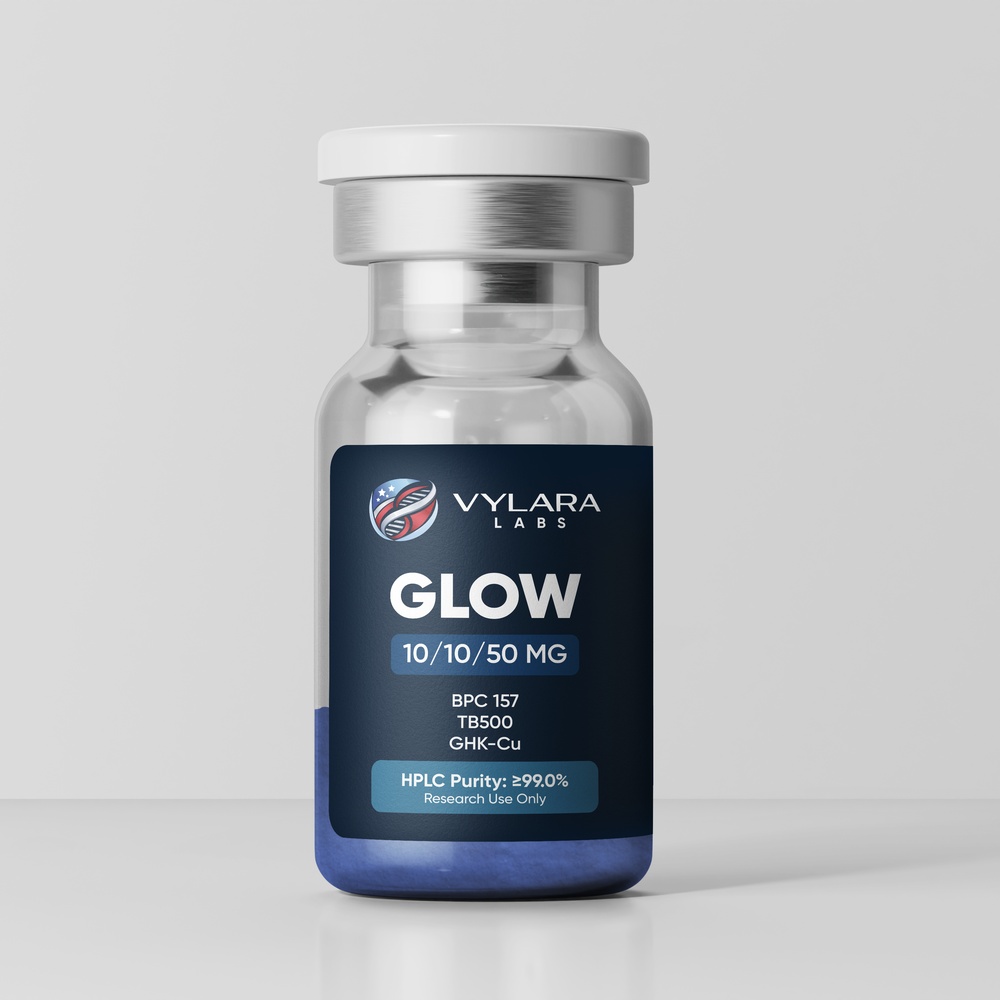
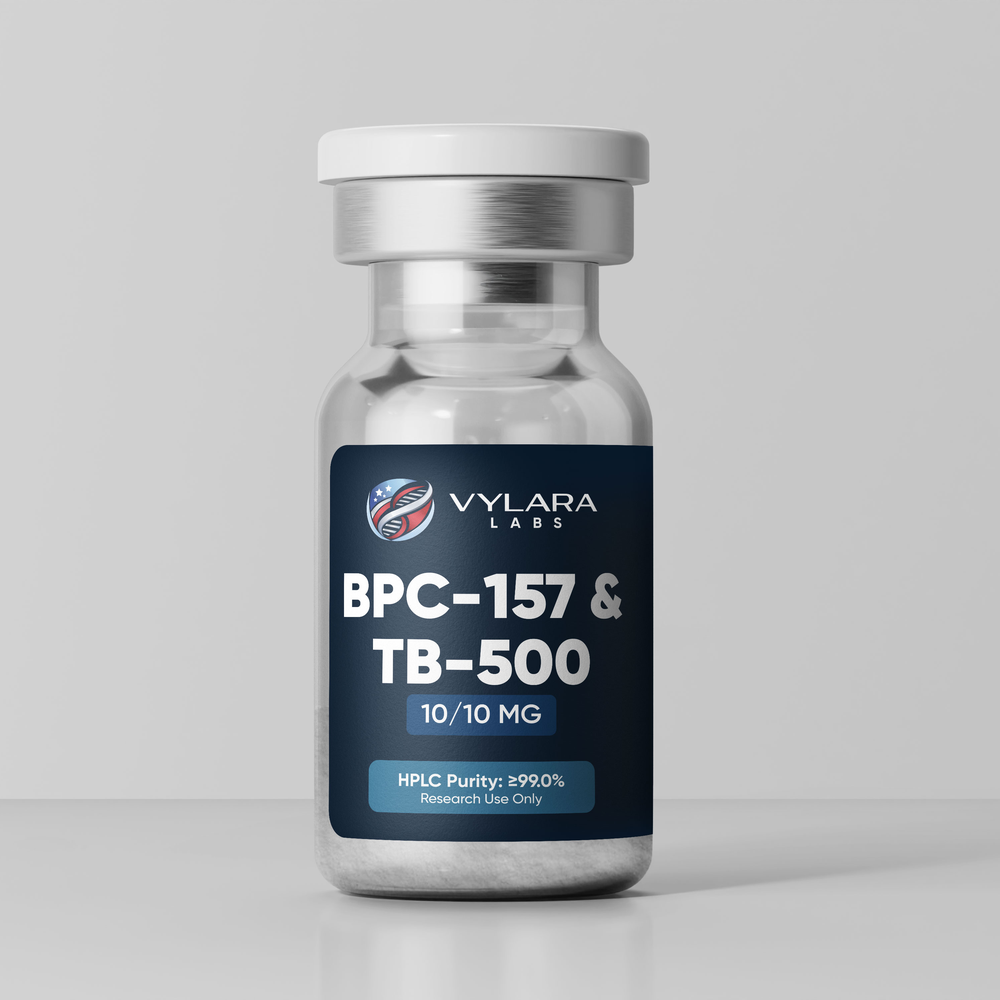
This research blend co-lyophilizes two peptides in a single vial: BPC-157 (Body Protection Compound-157), a stable synthetic pentadecapeptide derived from a protein in gastric juice, and TB-500, a synthetic fragment based on the actin-binding region of thymosin β-4. It is intended for combined-exposure studies in which both peptides are examined together.
The two are frequently paired in tissue-repair research because they act through complementary mechanisms — BPC-157 through growth-factor and nitric-oxide signalling, and TB-500 through actin regulation and cell migration. No published study evaluates this specific blend; the references below concern the individual components. It is offered strictly as a research material, and the studies cited describe preclinical and in-vitro findings only.
Mechanisms of interest in research
BPC-157: angiogenesis and cytoprotection
BPC-157 is studied for effects on new blood-vessel formation and cell survival, associated in models with VEGFR2 and nitric-oxide signalling — the vascular component of tissue repair.
TB-500: actin regulation and cell migration
TB-500 carries the actin-binding motif of thymosin β-4 and is studied for sequestering monomeric actin and promoting the cell migration that underlies wound closure and angiogenesis.
Specifications
Certificate of Analysis
Representative testing for BPC-157 & TB-500, part of our ongoing quality program. Testing is conducted on Vylara-supplied samples of this compound.
Selected Research
The following peer-reviewed studies are provided for scientific context on this compound’s research background. They describe preclinical and in-vitro findings only and are not claims about this product.
On BPC-157:
In cultured tendon explants and fibroblasts, BPC-157 increased fibroblast outgrowth, cell survival and migration via the FAK–paxillin pathway.
Chang CH, et al. J Appl Physiol. PMID: 21030672
A review describes BPC-157 as an angiomodulatory agent acting through nitric-oxide, VEGF and FAK-related pathways in injury models.
Seiwerth S, et al. Curr Pharm Des. PMID: 23782145
On TB-500 (thymosin β-4):
In animal-model studies, thymosin β-4 promoted cell migration, blood-vessel formation and cell survival while reducing inflammatory mediators.
Philp D, et al. Ann N Y Acad Sci. PMID: 20536453
In a cardiac explant model, thymosin β-4 stimulated epicardial cell outgrowth and differentiation into vascular cells, promoting neovascularization.
Smart N, et al. Ann N Y Acad Sci. PMID: 17495252
This product is intended exclusively for in-vitro laboratory research. It is not a drug, food, dietary supplement, or cosmetic, and it is not intended for human or veterinary diagnostic, therapeutic, or recreational use.