Description
Research Peptide≥99% HPLC StandardShips from Canada
Overview
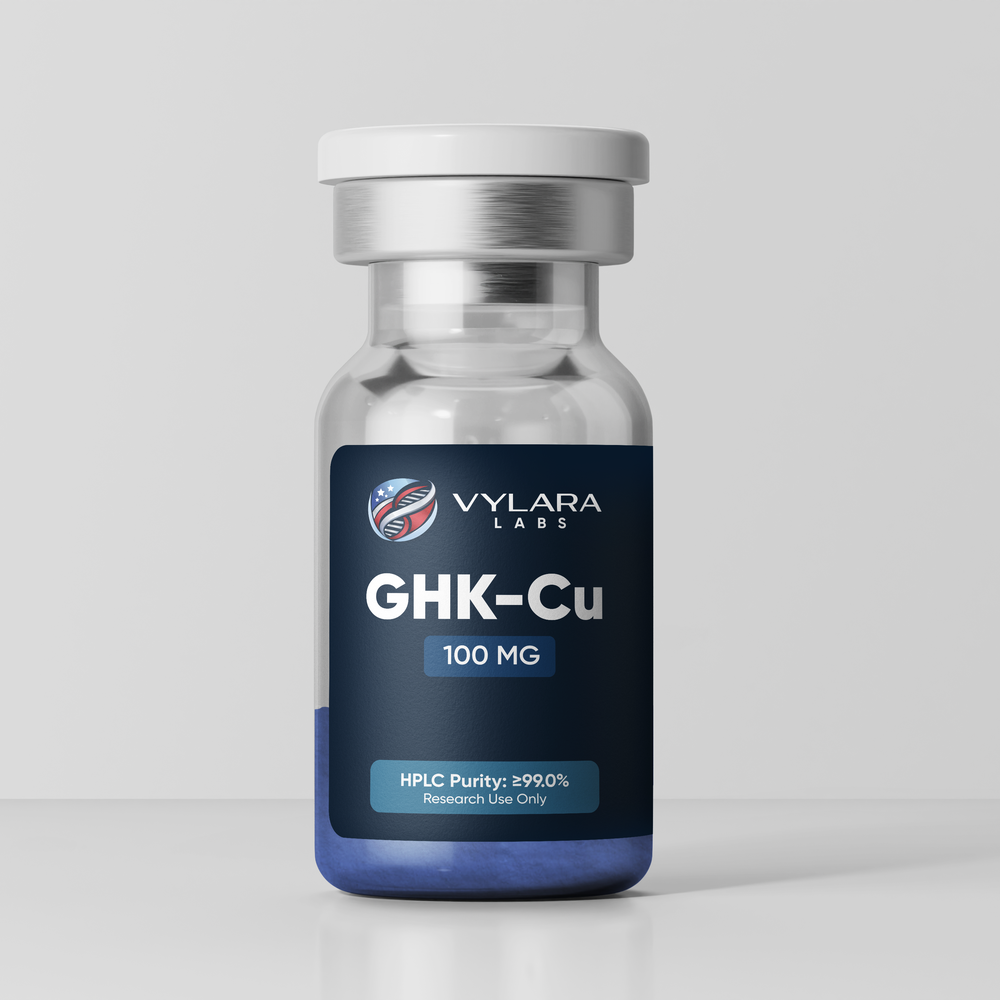
GHK-Cu is the copper(II) complex of the naturally occurring tripeptide glycyl-L-histidyl-L-lysine (GHK). GHK is found in human plasma and declines with age, and it binds copper with high affinity to form this blue-coloured complex. It is supplied as a stable lyophilized peptide.
In research the GHK-Cu complex is studied for roles in skin and connective-tissue biology — extracellular-matrix synthesis, wound repair, and antioxidant and gene-regulatory effects — with the bound copper considered important to its activity. It is offered strictly as a research material, and the study cited below describes preclinical findings only.
Mechanisms of interest in research
Copper delivery and extracellular-matrix synthesis
GHK binds copper(II) and can shuttle it between cells and extracellular carriers. In dermal and connective-tissue models the complex is associated with increased synthesis of collagen, elastin and glycosaminoglycans, core components of the extracellular matrix, which underlies its study in tissue repair.
Wound repair and angiogenesis
GHK-Cu is studied for promoting the cell migration and blood-vessel and nerve outgrowth involved in wound closure, and for attracting repair cells to injury sites in model systems.
Antioxidant and gene-regulatory effects
Beyond matrix synthesis, GHK has been reported to influence the expression of large numbers of genes and to support antioxidant enzyme activity, effects examined as part of its broad tissue-remodelling profile.
Specifications
Certificate of Analysis
Representative testing for GHK-Cu, part of our ongoing quality program. Testing is conducted on Vylara-supplied samples of this compound.
Selected Research
The following peer-reviewed studies are provided for scientific context on this compound’s research background. They describe preclinical and in-vitro findings only and are not claims about this product.
This review reports that the GHK peptide stimulates blood-vessel and nerve outgrowth, increases collagen, elastin and glycosaminoglycan synthesis, and shows tissue-repair and protective cellular actions across multiple organs.
Pickart L, et al. Int J Mol Sci. PMID: 29986520
This product is intended exclusively for in-vitro laboratory research. It is not a drug, food, dietary supplement, or cosmetic, and it is not intended for human or veterinary diagnostic, therapeutic, or recreational use.