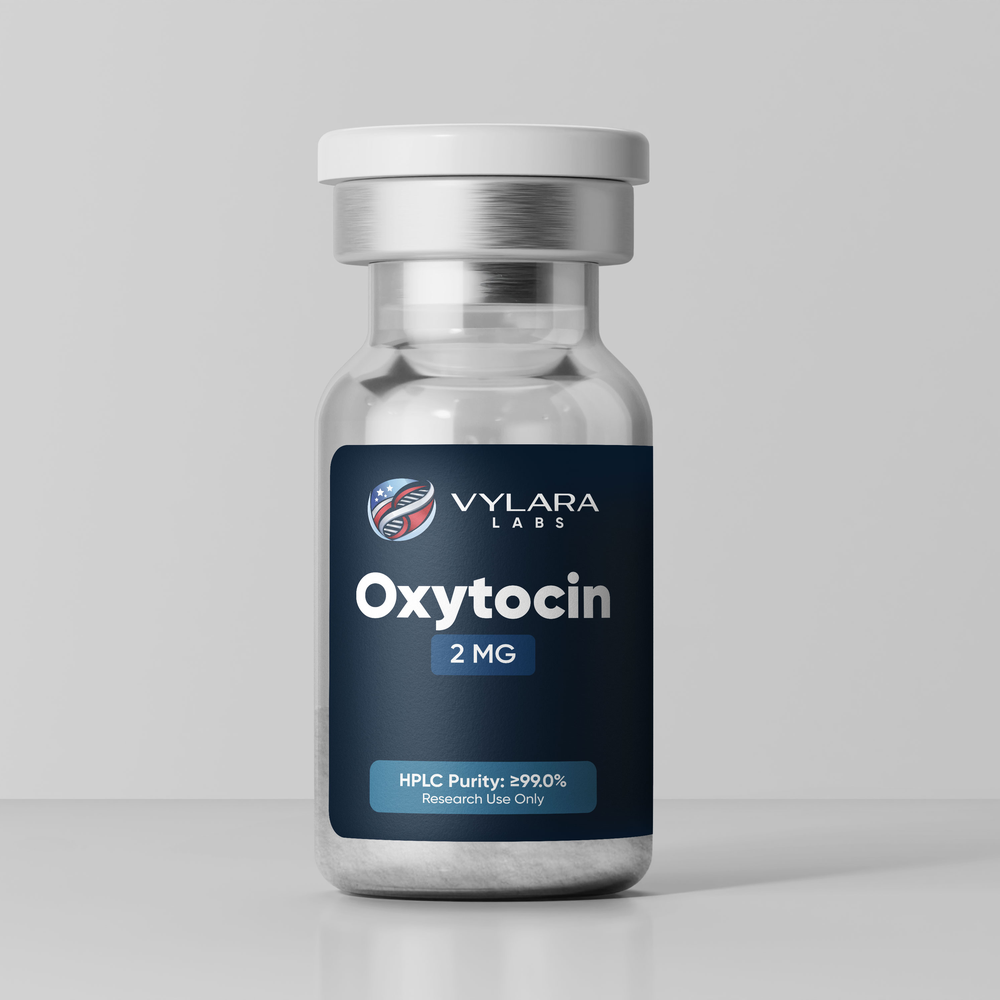
Description
Research Peptide≥99% HPLC StandardShips from Canada
Overview
Oxytocin is a nine-amino-acid neurohypophyseal peptide hormone with a single internal disulfide bridge, produced in the hypothalamus and released from the posterior pituitary. It is supplied here as its acetate salt in stable lyophilized form.
In research it is studied both as a peripheral hormone acting on smooth muscle and as a central neuromodulator of social and affiliative behaviour, through its single G-protein-coupled oxytocin receptor. It is offered strictly as a research material, and the study cited below describes preclinical findings only.
Mechanisms of interest in research
Oxytocin-receptor signalling
Oxytocin acts at the oxytocin receptor, a G-protein-coupled receptor found in the brain and peripheral tissues such as the uterus and mammary gland. Receptor location determines whether its effects are behavioural or contractile in a given model.
Central social and reward pathways
In the brain, oxytocin is studied as a modulator of social behaviour and reward, interacting with other neurotransmitter systems in regions such as the nucleus accumbens.
Peripheral smooth-muscle actions
Peripherally, oxytocin drives contraction of uterine and mammary myoepithelial smooth muscle, the basis of its classical physiological roles studied in tissue models.
Specifications
Selected Research
The following peer-reviewed studies are provided for scientific context on this compound’s research background. They describe preclinical and in-vitro findings only and are not claims about this product.
In mice, oxytocin acted as a social-reward signal in the nucleus accumbens through coordinated activity with serotonin, requiring oxytocin receptors on dorsal-raphe neurons to encode the rewarding properties of social interaction.
Dölen G, et al. Nature. PMID: 24025838
This review reports that oxytocin-receptor expression in human myometrium rises during pregnancy and peaks at the onset of labour, with uterine sensitivity to oxytocin tracking receptor levels.
Yulia A, Johnson MR. Minerva Ginecol. PMID: 24971782
This product is intended exclusively for in-vitro laboratory research. It is not a drug, food, dietary supplement, or cosmetic, and it is not intended for human or veterinary diagnostic, therapeutic, or recreational use.