
Description
Research Peptide≥99% HPLC StandardShips from Canada
Overview
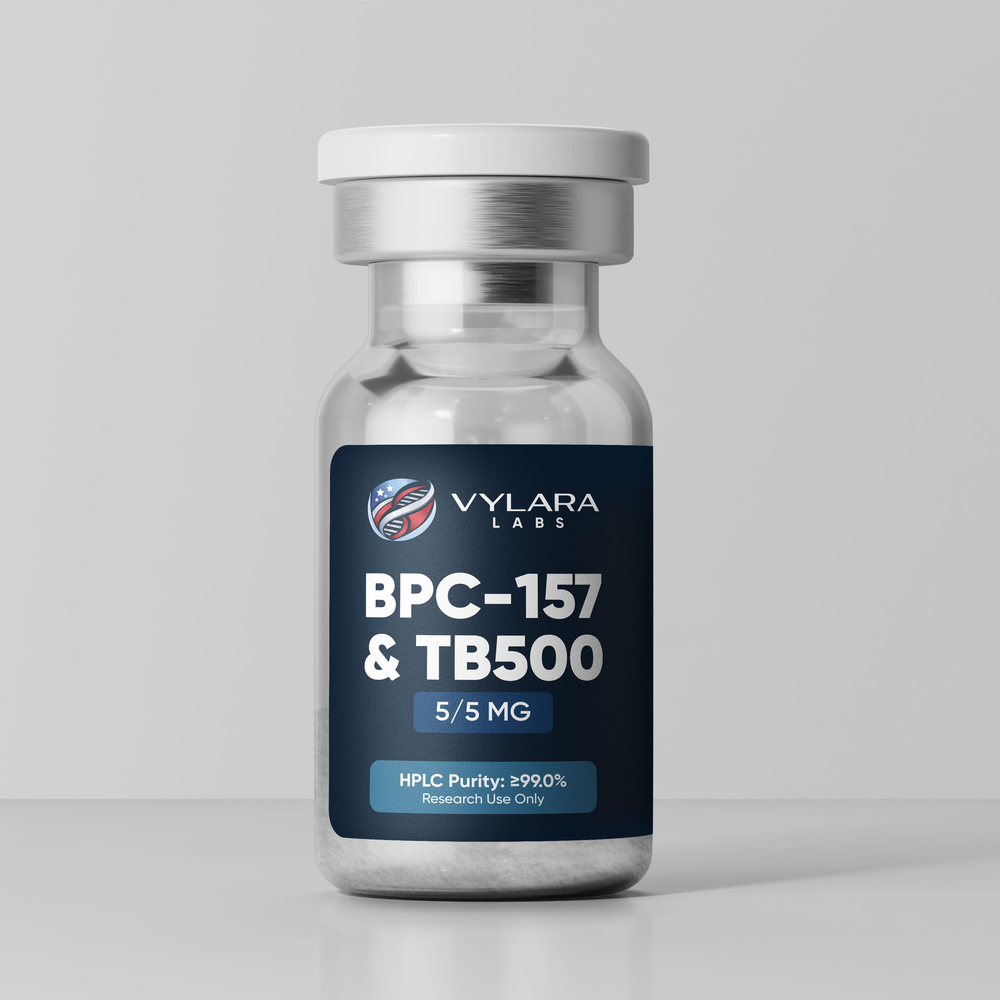
TB-500 is a synthetic peptide based on the actin-binding region of thymosin β-4 (Tβ4), a naturally occurring 43-amino-acid regenerative peptide found in most tissues and in high concentration in platelets and wound fluid. The fragment centres on the conserved actin-binding motif (LKKTETQ) that gives Tβ4 much of its activity, and it is supplied as a stable, water-soluble lyophilized peptide suited to laboratory handling.
In research, TB-500 and Tβ4 are studied for their role in cell motility and tissue regeneration. By binding monomeric G-actin, the peptide influences the assembly and disassembly of the actin cytoskeleton that underlies cell migration, and it is examined in preclinical and in-vitro models of angiogenesis, wound repair, and inflammation. It is offered strictly as a research material, and the studies cited below describe preclinical and in-vitro findings only.
Mechanisms of interest in research
G-actin sequestration and cytoskeletal dynamics
Thymosin β-4 is the major intracellular G-actin-sequestering peptide: it binds monomeric actin and buffers the pool available for filament formation. In cell models this regulation of actin polymerisation is associated with the changes in cell shape and motility required for migration, which is why the actin-binding motif carried by TB-500 is central to its study.
Cell migration and angiogenesis
Directed migration of endothelial cells is an early step in forming new vessels. In cultured cells and animal models, thymosin β-4 has been associated with increased endothelial and keratinocyte migration and with markers of angiogenesis, making it a frequent tool in vascular and wound-repair research.
Tissue repair and anti-inflammatory signalling
Beyond motility, thymosin β-4 has been studied for effects on cell survival, reduced scar formation, and lowered levels of inflammatory mediators in injury models. These observations underpin its use as a reference peptide in soft-tissue and cardiac repair research.
Specifications
Selected Research
The following peer-reviewed studies are provided for scientific context on this compound’s research background. They describe preclinical and in-vitro findings only and are not claims about this product.
In animal-model studies reviewed here, thymosin β-4 promoted cell migration, blood-vessel formation, cell survival and stem-cell maturation while reducing inflammatory mediators.
Philp D, et al. Ann N Y Acad Sci. PMID: 20536453
In an adult cardiac explant model, thymosin β-4 stimulated epicardial cell outgrowth and their differentiation into endothelial and smooth-muscle cells, promoting neovascularization.
Smart N, et al. Ann N Y Acad Sci. PMID: 17495252
This review describes thymosin β-4 as promoting cell migration and the mobilization and differentiation of stem/progenitor cells while reducing scar formation and fibrosis, with proposed applications in dermal, corneal, cardiac and neurological repair.
Goldstein AL, et al. Expert Opin Biol Ther. PMID: 22074294
This product is intended exclusively for in-vitro laboratory research. It is not a drug, food, dietary supplement, or cosmetic, and it is not intended for human or veterinary diagnostic, therapeutic, or recreational use.