Description
Research Peptide≥99% HPLC StandardShips from Canada
Overview
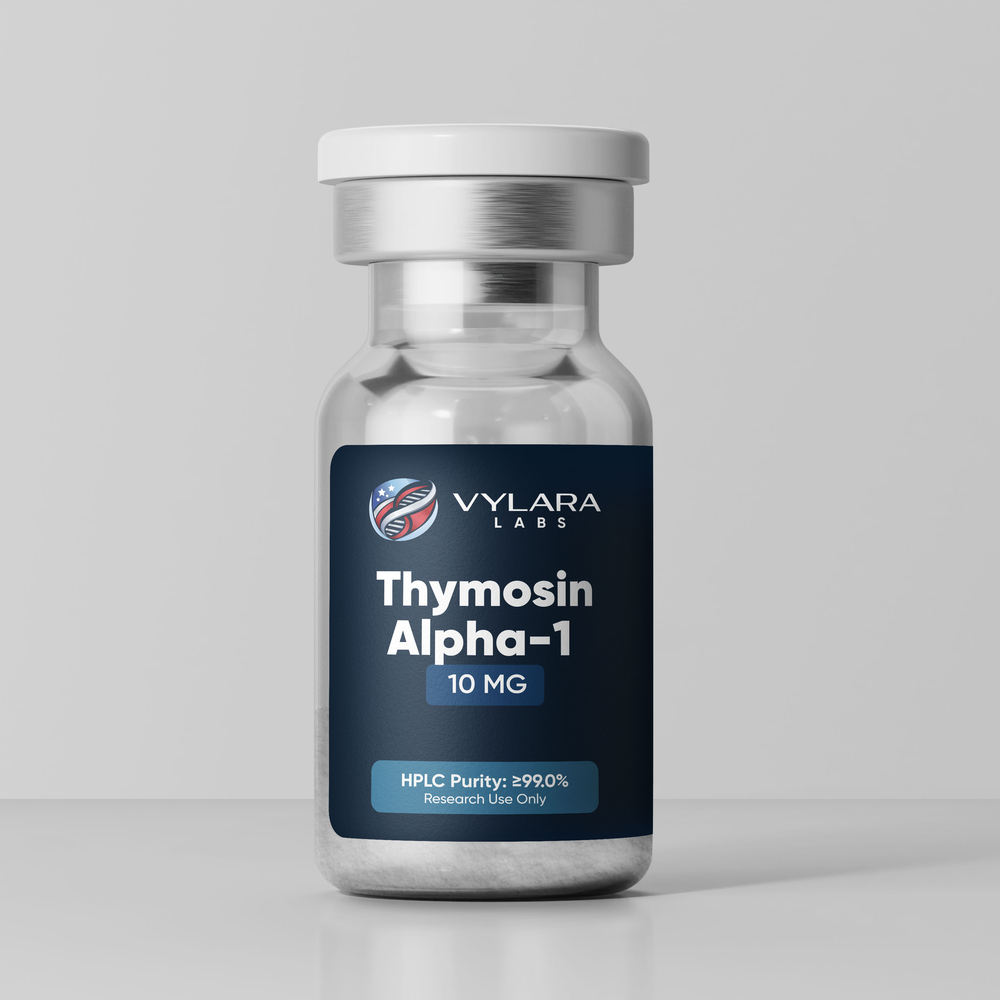
Thymosin Alpha-1 (Tα1) is a 28-amino-acid, N-terminally acetylated peptide derived from the precursor protein prothymosin α. Originally identified in thymic tissue extracts, it is one of the best-characterised immune-modulating peptides. It is supplied as a stable lyophilized peptide.
In research it is studied as a modulator of immune function, particularly the maturation and activity of T cells and the signalling of antigen-presenting cells. It is offered strictly as a research material, and the study cited below describes review findings only.
Mechanisms of interest in research
T-cell maturation and function
Thymosin α1 is studied for augmenting T-cell function, including the differentiation of immature thymocytes into active T cells, a core aspect of its immune-modulating research profile.
Antigen-presenting-cell and Toll-like-receptor signalling
It has been examined for effects on dendritic cells and Toll-like-receptor pathways, through which it is proposed to shape cytokine production and adaptive immune responses in model systems.
Antiviral and immune-restoration models
Because of these actions, Tα1 is frequently studied in models of immune suppression and antiviral response.
Specifications
Selected Research
The following peer-reviewed studies are provided for scientific context on this compound’s research background. They describe preclinical and in-vitro findings only and are not claims about this product.
In a fungal-infection model, thymosin α1 induced functional maturation and interleukin-12 production by dendritic cells through Toll-like-receptor signalling and the p38 MAPK / NF-κB pathway.
Romani L, et al. Blood. PMID: 14982877
A mechanistic review describes thymosin α1 as activating dendritic cells through Toll-like-receptor signalling, shifting the inflammation balance and increasing expression of tumour, viral and MHC-class-I antigens.
Garaci E, et al. Ann N Y Acad Sci. PMID: 17600290
This product is intended exclusively for in-vitro laboratory research. It is not a drug, food, dietary supplement, or cosmetic, and it is not intended for human or veterinary diagnostic, therapeutic, or recreational use.